In the ever-evolving landscape of video technology, the need to improve compatibility with various video and control systems has become vital. Industry experts, like Dr. Emily Chen, a renowned audiovisual integrator, emphasize this point. She stated, "Seamless compatibility is the backbone of modern video systems." Her insight underscores a pressing issue faced by many users and systems.
Modern video environments incorporate diverse devices and platforms. Without effective strategies, these systems can clash, causing functionality issues. Consider a conference room equipped with advanced screens but incompatible control units. When systems fail to communicate, the user experience degrades. Thus, improving compatibility with various video and control systems is more than a technical challenge; it’s essential for smooth operation.
The journey towards enhanced compatibility is not without its hurdles. Many systems are outdated or not designed to work together. Users often grapple with inconsistent performance and unexpected errors. Addressing these setbacks requires a keen understanding of the technology landscape and a commitment to continual learning and adaptation. By doing so, stakeholders can move towards a future where seamless integration becomes the standard.
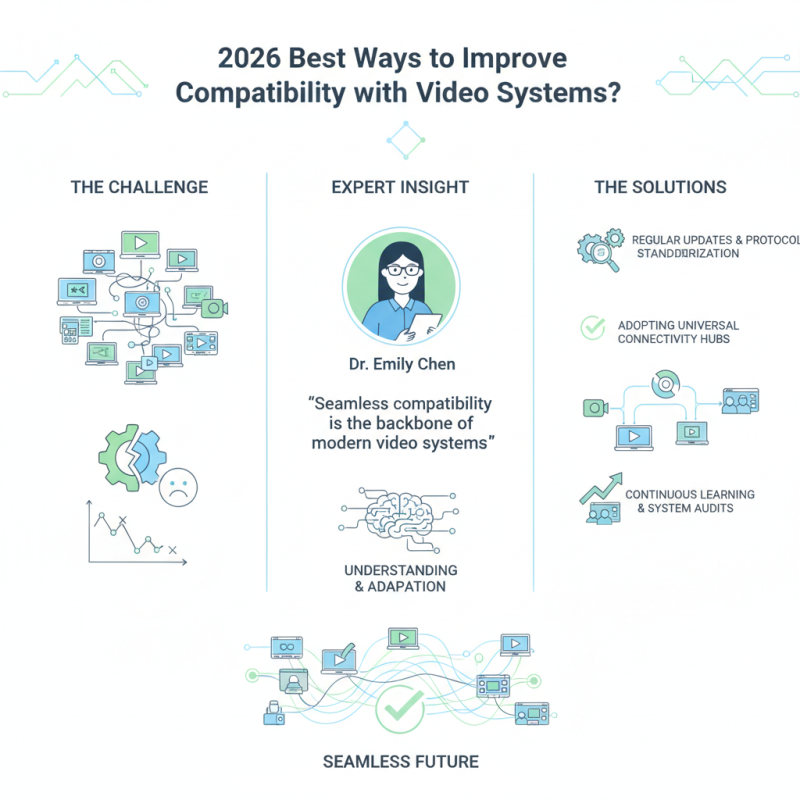
Understanding compatibility challenges in video systems is crucial for smooth operation. Various factors affect compatibility. Video formats, resolutions, and codecs often differ among devices, leading to playback issues.
Many users encounter frustration when trying to connect different systems. The resolution mismatch is a common enemy. A 4K system may struggle with a standard HD output.
In addition, software compatibility plays a significant role. Firmware updates can improve or complicate connections. Some systems prioritize updates while others lag behind. Users often overlook this aspect. It is vital to keep all systems updated for better interoperability.
Quality cables and connectors also matter. Sometimes, a simple cable swap can fix major problems.
Considering these challenges can lead to better video experiences. Users should regularly assess their setups. Reflecting on what worked well and what did not can guide improvements. Testing different configurations can provide valuable insights. Identifying ongoing issues is key to finding solutions. The more aware users are, the easier it becomes to enhance compatibility.
Compatibility with video systems hinges on several critical factors. One primary aspect is the resolution supported by the devices. Many new systems offer 4K or even 8K resolutions, while older ones may struggle with just HD. Ensuring that both devices can communicate at the same resolution is vital for a seamless experience. Testing this compatibility through various formats can help avoid frustrating playback issues.
Another factor is the encoding format used during the video’s creation. Different systems support various codecs like H.264, AVI, or MPEG. If there’s a mismatch, playback won’t occur. Users often don't realize that even slight differences in file types can lead to problems. It's wise to consult documentation for specs before trying to connect devices.
Finally, the connection type also plays a crucial role. Various outputs like HDMI, DisplayPort, or even legacy connectors can impact compatibility. The presence of adapters may help bridge some gaps, but they aren't foolproof. Relying on adapters often leads to limitations in quality or performance. A proactive approach in matching components can reduce these pitfalls and enhance overall compatibility.
Enhancing video system interoperability requires a systematic approach.
Start by ensuring compatibility with various codecs and file formats. Different systems often use different standards.
This can lead to frustrations when trying to share or stream content.
Prioritize using widely accepted formats
to reduce these challenges.
Consider the role of protocols in connection.
Utilizing established protocols facilitates communication between systems.
However, not all systems support every protocol. It’s crucial to identify which ones your systems can work with.
Testing configurations regularly can reveal unexpected issues.
This process may be time-consuming but it’s essential for reliable connections.
User experience matters too. Comprehensive user training can bridge gaps caused by
technical compatibility issues. Encourage feedback from users to identify pain points they encounter.
Some users might struggle with interface navigation. Such insights can lead to practical enhancements in future implementations.
The goal is to create a seamless experience across platforms, minimizing frustration and downtime.
In the drive to enhance video system compatibility, several tools and technologies come to the forefront. Video codecs are critical in ensuring smooth playback across different platforms. According to a recent market research report, 75% of companies face challenges with compatibility due to outdated codecs. Adopting modern codec standards, like H.265, can significantly reduce data usage while maintaining quality.
Another promising avenue involves the use of adaptive bitrate streaming. This technology adjusts video quality in real-time based on the viewer’s internet speed. Studies show that utilizing adaptive streaming can lead to a 30% increase in viewer retention. However, implementation can be complex and requires robust infrastructure.
Integrating content delivery networks (CDNs) can further improve compatibility. CDNs distribute video content efficiently, reducing latency and buffering. Some reports indicate that organizations that leverage CDNs see a 50% decrease in playback failures. Yet, businesses may struggle with the initial setup and ongoing costs. Addressing these challenges is crucial for realizing the full benefits of these technologies.
Integrating video systems can be challenging. Many users face issues related to compatibility, which can hinder performance. Troubleshooting starts by identifying common problems. Check connections and ensure cables are properly seated. Loose connections are often a culprit.
Running software diagnostics helps pinpoint issues. Many systems provide built-in tests. These can reveal if the system is operating as intended. Look for error messages. They often indicate what needs fixing. If performance is below expectations, consider updating drivers or firmware. Outdated software can cause compatibility problems, leading to frustration.
Document your troubleshooting steps. This practice aids in reflecting on what worked and what didn’t. Sometimes, revisiting failed setups can provide new insights. User experiences can differ drastically. Analyze all variables for better understanding. Continuous testing leads to improved integration in the future. Building a reliable video system takes time and persistence.
This chart illustrates the effectiveness of various methods for improving compatibility with video systems based on user feedback in 2026.
: Video formats and resolutions often differ, causing playback issues. A 4K system may struggle with HD outputs.
Regular updates are vital. Firmware updates improve connections, but some systems lag behind.
Check connections first. Ensure cables are seated properly. Loose connections frequently cause issues.
Running built-in software diagnostics can reveal problems. Look for error messages; they indicate needed fixes.
Quality cables and connectors impact performance. Sometimes, a simple cable swap resolves major issues.
Document your troubleshooting steps. Reflecting on them can guide future setups and improve understanding.
Consider updating drivers or firmware. Outdated software often leads to compatibility problems.
Continuous testing helps identify ongoing issues. Reflecting on different setups leads to better integration in the future.
Yes, revisiting failed setups can spark new insights. Past experiences can guide current troubleshooting efforts.
Building a reliable system takes time. Continuous effort and testing are necessary for optimal performance.
In the rapidly evolving landscape of video technology, improving compatibility with various video and control systems is crucial for seamless integration and optimal performance. Understanding the challenges associated with video systems compatibility is the first step in addressing these issues. Key factors such as resolution formats, frame rates, and connection standards play a significant role in interoperability.
To enhance video system integration, practical methods can be employed, including the use of standardized protocols and proper configuration settings. Various tools and technologies are available to facilitate better compatibility, allowing for smoother communication between different systems. Additionally, thorough testing and troubleshooting processes are essential to identify and resolve any compatibility issues, ensuring that all components function harmoniously together. By focusing on these strategies, organizations can significantly improve their video system compatibility and achieve a more efficient audiovisual experience.

Xiguang Display