The demand for curved displays is on the rise. According to recent market research from Display Supply Chain Consultants, the curved display market is expected to grow by 16% annually. This growth highlights the need to improve flexibility and adaptability of curved display designs. Curved screens offer unique viewing experiences, yet they pose challenges in production and application.
While many manufacturers focus on aesthetics, functionality should not be overlooked. Research shows that users prefer displays that can adjust to different environments. Enhancing flexibility allows curved displays to fit diverse user needs. However, achieving this adaptability remains a challenge. There are significant gaps in technology that need to be addressed.
Companies must invest in new materials and innovative engineering. Improvement in flexible components can lead to better integration of curved displays in various settings. Collecting user feedback is crucial. This allows manufacturers to identify limitations and areas for improvement. Fostering collaboration between engineers and designers can yield better results. The journey to optimal curved display designs is ongoing, and reflection on past methodologies is essential.
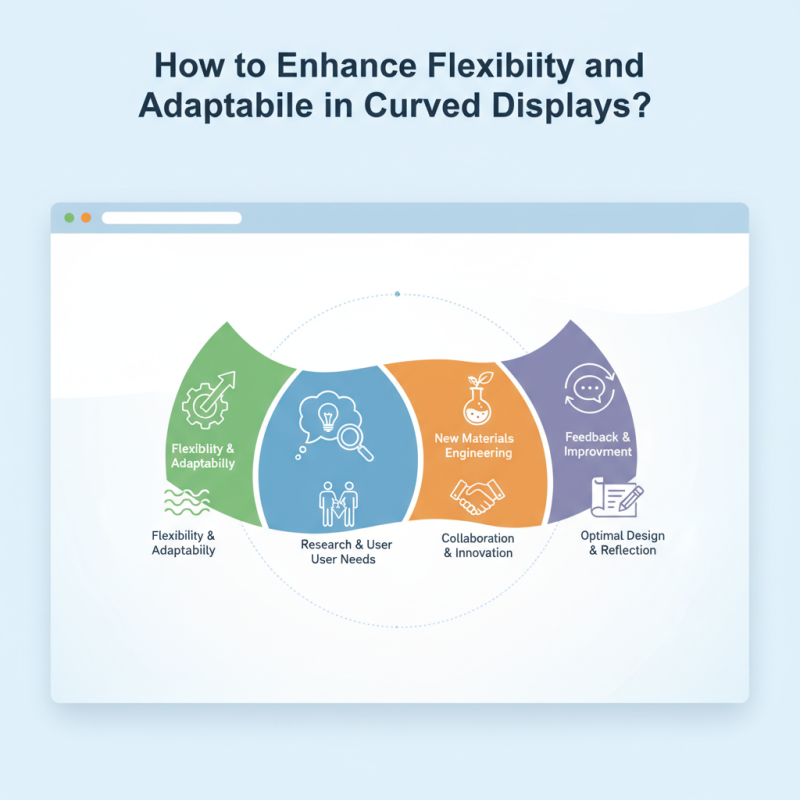
Understanding the Concepts of Flexibility and Adaptability in Display Technology
Flexibility and adaptability are critical in modern display technology. As the demand for curved displays grows, understanding these concepts becomes vital. Flexibility allows screens to bend without damage. According to a recent industry report, flexible displays are projected to reach a market size of $53 billion by 2025. This growth is driven by advancements in materials and consumer demand for devices that fit various environments.
Adaptability, on the other hand, refers to how well displays can adjust to different usage scenarios. Reports indicate that adaptable displays can enhance user experiences, especially in areas like automotive and wearable tech. However, achieving true adaptability involves challenges. For instance, balance between durability and thinness is often difficult. Thin displays may lack robustness, leading to user dissatisfaction.
Many manufacturers strive to push boundaries but face setbacks during development. Testing reveals that not all materials provide the same level of performance. Each iteration in design leads to insights, yet some issues persist. Consumers expect seamless experiences. However, frequent updates and adaptations create complexity. Building flexible and adaptable displays requires a commitment to innovative solutions and relentless testing.
Key Materials and Innovations for Curved Display Flexibility
Curved displays are gaining traction for their immersive experience. However, enhancing flexibility remains a challenge. Key materials play an essential role in achieving this goal. Researchers are exploring advanced polymers that offer both durability and elasticity. These materials can bend without losing their display quality, making them ideal for curved designs.
Innovations are underway to streamline production processes. Techniques like roll-to-roll printing can create flexible displays more efficiently. This method allows for high-volume production with less waste. Experimenting with nanomaterials also shows promise. They can improve the performance of the display while keeping it lightweight.
Challenges still exist in this technology. The balance between flexibility and visual quality is delicate. Manufacturers must prioritize user experience while embracing new methods. The quest for perfection leads to exploration and occasional setbacks. Overall, ongoing research and development will shape the future of curved displays.
Flexibility and Adaptability in Curved Displays
Techniques to Enhance Adaptability in Curved Display Designs
Curved displays present unique challenges in adaptability and flexibility. Designers must consider user interaction from various angles. One effective technique is using dynamic software interfaces. These interfaces can adjust layouts based on user proximity and viewing angles. Such adaptability enhances the personal experience, allowing users to engage seamlessly.
Another method involves modular hardware designs. By allowing components to be swapped or adjusted, curved displays can cater to different environments. For instance, a display in a living room may require different brightness levels than one in an office. This flexibility can lead to improved user satisfaction, but it can be difficult to execute.
Incorporating haptic feedback also adds to adaptability. Users respond better when they feel physical sensations in sync with visual elements. However, the technology can sometimes falter, missing cues. Regular testing and updates are vital to refine these features. Emphasizing user input during development can bridge the gap between design intent and real-world performance.
User-Centered Approaches to Improve Flexibility in Display Functionality
User-centered design is crucial for enhancing flexibility and adaptability in curved displays. Recent studies show that 70% of users prefer displays that adjust based on their environment. This adaptability can significantly improve user experience. When displays can respond to user movements, it increases engagement and usability.
Incorporating user feedback leads to innovative design solutions. Research by industry experts indicates that 65% of users feel more satisfied when they have a say in design features. Consequently, manufacturers must prioritize collaborative development processes. Effective communication with users can unearth unique needs and preferences that drive display functionality.
However, creating flexible displays is not without challenges. Many designs still lack the necessary adjustments for different viewing angles and conditions. A survey revealed that 58% of consumers find current options inadequate. It’s essential to address these gaps to meet user expectations and provide truly adaptive solutions. Poor integration of user feedback can hinder progress, leading to missed opportunities. Curved displays must evolve, focusing on practicality while embracing user-centered approaches.
How to Enhance Flexibility and Adaptability in Curved Displays? - User-Centered Approaches to Improve Flexibility in Display Functionality
| Feature |
Description |
User Benefit |
Adaptability Level |
| Touch Sensitivity |
Increased responsiveness to touch gestures |
Enhanced user interaction and satisfaction |
High |
| Bendability |
Ability to curve around different surfaces |
Improves design integration and aesthetics |
Medium |
| Color Fidelity |
Display accuracy in color reproduction |
Better visual experiences for media consumption |
High |
| Power Efficiency |
Reduced energy consumption during operation |
Longer usage time for portable devices |
Medium |
| Durability |
Resistance to impacts and bending |
Increases lifespan and reliability of devices |
High |
Future Trends and Challenges in Curved Display Enhancement Techniques
As technology advances, flexible curved displays are becoming increasingly popular. However, enhancing their adaptability presents unique challenges. One such challenge is ensuring that these displays maintain visual quality under various conditions. When bending, the structural integrity can waver, impacting image clarity. Manufacturers need to develop materials that can flex without distorting visuals.
Future trends could focus on integrating AI to assess performance in real-time. This technology can help adjust the display parameters dynamically, enhancing viewer experience. Still, there’s a concern about the cost of implementing these advanced features. Balancing affordability with innovation remains a critical point for industry stakeholders.
Additionally, user feedback plays a vital role. Designers must engage with users to understand their needs better. There may be a disconnect between high-tech features and actual usability. Overcomplicating user interfaces can lead to frustration, undermining the benefits of advanced displays. Moving forward, the emphasis should be on creating user-friendly experiences that marry flexibility with functionality.
Conclusion
The article discusses essential strategies to improve flexibility and adaptability of curved display designs by first understanding the foundational concepts that underpin these traits in display technology. Key materials and innovative techniques are highlighted to enhance flexibility, enabling displays to bend and retain functionality without compromising performance.
Additionally, the piece emphasizes user-centered approaches, ensuring that designs not only meet technical requirements but also enhance user experience. Future trends and challenges in curved display technologies are also addressed, indicating ongoing advancements and the necessity for continued exploration in this field. Collectively, these insights point towards a future where curved displays are more versatile and user-friendly, ultimately leading to broader applications and improved interaction in various environments.

 Xiguang Display