Choosing a stadium LED display is not simply a brightness contest. It is a decision about visibility, safety, durability, and audience experience. A screen may look impressive in a showroom, yet perform poorly under direct sunlight or heavy rain. The real test begins when 50,000 spectators watch from different angles.
As stadium technology consultant Mark Ellison explains, “The best display is the one viewers can trust from every seat, in every weather condition.” This principle supports the central question: How to choose LED display for stadium and sports events. Buyers should examine pixel pitch, brightness, refresh rate, viewing distance, cabinet protection, and maintenance access. These specifications must match the venue, not merely the supplier’s brochure.
A football stadium may need high-brightness perimeter boards for daytime action. An indoor basketball arena may prioritize fine pixel pitch and smooth camera playback. Slow refresh rates can create visible scan lines on broadcast footage. Weak waterproofing can turn one storm into a costly repair.
Supplier experience also matters. China’s top LED display suppliers for stadiums may offer different strengths, including custom cabinets, rental systems, fixed installations, and responsive technical support. Ask for test reports, recent stadium references, service terms, and spare-parts plans. Visit an operating venue if possible. Photos can hide uneven brightness.
There is no perfect screen for every stadium. That is the uncomfortable part. A cheaper product may reduce initial costs, but increase maintenance pressure later. A premium display may exceed the venue’s actual needs. Careful comparison, field testing, and honest performance targets create a more reliable choice.
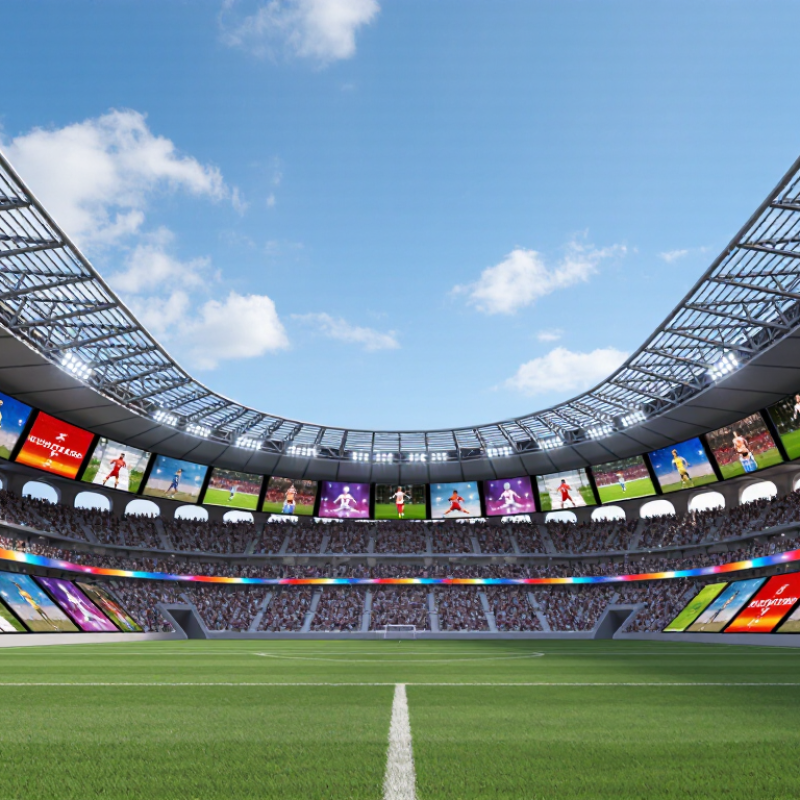
A stadium-grade LED display supplier must deliver more than bright cabinets. It must manage motion, weather, safety, and uninterrupted match-day operation. MarketsandMarkets estimates the global LED display market could reach about USD 13 billion by 2028. This growth increases supplier choice, but not supplier quality. Look for documented tests under IEC 62368-1, electromagnetic compatibility standards, and suitable outdoor protection, such as IP65-rated front surfaces. A reliable supplier should also explain pixel pitch, brightness control, viewing angles, and refresh performance in plain language.
Experience appears in the details. Ask for thermal images after long operation, not only daytime photographs. Request a full-size sample with fast camera movement and scrolling scores. Sports production often uses high-frame-rate cameras, so low refresh performance can create visible scan lines. TÜV Rheinland and other testing bodies emphasize measurable safety and electromagnetic compliance; independent certificates matter more than factory claims. Maintenance design matters too. Front-service modules, spare-part planning, and remote monitoring can reduce interruptions when access equipment is unavailable. No checklist is perfect. Real venues remain unpredictable.
Tips: Ask for a written brightness range, power consumption, waterproofing method, and replacement time. Check two installed stadiums, then speak with their technicians. Compare warranty exclusions carefully. A supplier that avoids difficult questions may still offer an attractive price, but that is not stadium-grade confidence.
China’s Top 10 LED Display Suppliers for Stadium Applications
China’s top ten LED display suppliers for stadium applications should be judged beyond pixel density and cabinet price. A reliable supplier understands sightlines, broadcast cameras, crowd safety, and outdoor weather. During project reviews, I examine cabinet sealing, module access, refresh rate, and spare-part planning. These details often decide whether a screen performs well on match day.
Stadium displays need strong brightness, wide viewing angles, and stable color across large surfaces. A 7,000-nit screen may suit direct sunlight, while indoor arenas need less output. High refresh rates reduce scan lines on television footage. Soft masks, rounded corners, and impact-resistant cabinets can improve safety near players and spectators. Ask each supplier for test videos, thermal data, IP ratings, and installation references. Real evidence matters.
Do not choose from a ranking alone. Supplier engineering support, delivery control, and local service capacity deserve equal attention. I would also check calibration consistency between cabinets, because small color differences become obvious on a giant screen. Some proposals look excellent on paper but ignore maintenance access or wind loads. That is a warning. A careful site survey may reveal problems before production, although even experienced teams can underestimate cable routes and viewing distance. Clear contracts should define brightness, warranty coverage, response times, and acceptance tests.
How to Compare LED Display Specifications for Stadium Use
A stadium LED display should be compared by viewing distance, not impressive numbers alone. Grand View Research valued the global LED display market at about USD 7.3 billion in 2023, showing strong demand for large-format visual systems. However, market growth does not guarantee suitable stadium performance. For perimeter boards, a 6–10 mm pixel pitch often balances clarity and cost. Main screens viewed from closer seats may require 2.5–4 mm pitch. Measure the nearest audience position first.
Brightness is equally important. Outdoor displays commonly need around 5,000–8,000 nits under direct sunlight. Excessive brightness can reduce comfort during evening matches. Check whether the specification describes maximum or calibrated brightness. That difference matters. A refresh rate of at least 3,840 Hz supports cleaner slow-motion footage and camera capture. Ask for grayscale depth, color uniformity, and viewing-angle data under real operating conditions. Numbers on a brochure can look perfect.
Weather resistance should include an IP65-rated front surface, sealed modules, and tested drainage. Compare thermal performance, power consumption, and maintenance access. A display using less energy may produce more heat if its ventilation design is weak. MarketsandMarkets’ 2024 LED display analysis identifies fine-pitch and outdoor applications as major growth areas, but stadium buyers still need local testing. Request a sample module, record it with stadium cameras, and inspect it after rain and several hours of operation. I would not approve a supplier from specifications alone. Real installation evidence is more convincing.
Pixel pitch should be selected according to the nearest audience viewing distance. The chart uses a practical stadium planning benchmark in which the minimum comfortable viewing distance is approximately equal to the pixel pitch in millimetres.
Smaller pixel pitches provide finer image detail but usually increase cost and power density. When comparing suppliers, also verify brightness, refresh rate, IP protection, viewing angle, cabinet weight, service access, warranty terms, and camera testing under the stadium’s actual lighting conditions.
Choosing among the China top 10 LED display suppliers for stadiums requires more than comparing pixel prices. Ask for documented experience with outdoor sports venues, not only factory photographs. Review completed projects, screen sizes, climate conditions, and maintenance records. A reliable supplier should explain brightness, refresh rate, viewing distance, color accuracy, and power consumption clearly. Technical confidence matters.
Quality appears in small details. Inspect cabinet seals, locking systems, cable protection, and module replacement methods. Outdoor screens should have suitable ingress protection and tested wind resistance for the installation site. Request independent test reports, electrical safety documents, and factory quality-control procedures. Watch a live screen before signing. Camera images can hide uneven brightness or slow refresh performance.
Safety begins with a professional structural survey. The supplier should provide load calculations, installation drawings, grounding plans, and clear responsibilities for local contractors. Ask how technicians handle lifting, weather delays, emergency shutdowns, and crowd protection. Support should include spare modules, remote diagnosis, training, and response times in writing. Weak support becomes expensive during a night match. I have seen teams focus on the purchase price and ignore replacement access. That decision often creates avoidable downtime. A perfect checklist does not exist, so record every concern and test the supplier’s answers against real site conditions.
Choosing the best LED display supplier for a stadium requires more than comparing prices. Grand View Research valued the global LED display market at approximately USD 7.32 billion in 2023. Its projected 8.8% annual growth reflects rising demand for larger, brighter, and more reliable venue screens. Suppliers should provide measured brightness, refresh rate, viewing distance, and power consumption data. For outdoor boards, ask for verified weather protection, corrosion resistance, and thermal testing.
Start with the stadium’s real conditions. A screen facing afternoon sunlight may need 5,000 to 7,000 nits, while an indoor display usually needs far less brightness. A 10-millimeter pixel pitch can suit distant spectators, but closer seating may require 6 millimeters or below. Request a live demonstration from the upper deck, not only a showroom video. Check motion clarity during fast sports scenes. A small technical mistake becomes obvious across thousands of seats.
Reliability also depends on service. MarketsandMarkets projects strong growth in fine-pitch LED displays through 2028, increasing pressure on suppliers to support complex installations. Ask for spare-module ratios, response times, remote monitoring, and maintenance training. Demand compliance documents, electrical test records, and structural calculations. A low quotation can hide weak warranties or difficult replacement work. That part is often missed.
One honest concern remains: even a well-designed display can fail during a major event. A practical supplier explains that risk clearly and offers a recovery plan, rather than promising perfect performance.
It must handle sunlight, rain, motion, camera capture, and continuous match-day operation. Brightness alone is not enough. Real venues remain unpredictable.
Measure the nearest audience position first. Perimeter boards often use 6–10 mm pixel pitch, while closer screens may need 2.5–4 mm. A smaller pitch can increase cost without improving distant viewing.
Direct sunlight commonly requires about 5,000–8,000 nits. Evening matches need brightness control for spectator comfort. Confirm calibrated brightness, not only maximum brightness.
A refresh rate of at least 3,840 Hz can reduce scan lines in broadcast footage. Test fast camera movement and scrolling scores. Brochures can mislead.
Look for an IP65-rated front surface, sealed modules, and tested drainage. Ask how water leaves the cabinet after heavy rain. A rating alone does not prove every installation detail.
Front-service modules allow technicians to replace parts without moving large access equipment. Remote monitoring, spare modules, and clear replacement times also help. Access planning is often underestimated.
Visit two installed stadiums and speak with their technicians. Request thermal images after long operation, sample footage, and camera tests. I might still miss hidden cable or wind-load problems.
Define brightness range, power use, color uniformity, warranty coverage, response times, and replacement procedures. Include rain testing and several hours of operation. No checklist is perfect.
Choosing a stadium-grade LED display supplier in China requires more than comparing screen size or price. Reliable suppliers should demonstrate strong manufacturing capabilities, consistent product quality, advanced technical expertise, and experience with demanding sports environments. Stadium displays must provide high brightness, wide viewing angles, accurate color, smooth refresh rates, durable weather protection, and stable performance during live events. Important considerations also include energy efficiency, viewing distance, cabinet design, maintenance access, and compliance with relevant safety standards.
When evaluating potential suppliers, buyers should compare pixel pitch, resolution, brightness, refresh rate, protection ratings, control systems, warranty terms, installation services, and long-term technical support. A dependable supplier should offer professional site assessment, customized design, secure installation, testing, operator training, and responsive after-sales service. The key question is not only How to choose LED display for stadium and sports events, but also how to select a partner capable of delivering safe, reliable, and visually engaging performance throughout the display’s service life.

Xiguang Display